Opinião
Tampas de garrafa e foguetões de reforço

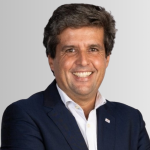
Foto: Randy M. Ataíde, investidor e consultor
Há alguns meses, sentei-me no meu café favorito em Alcácer do Sal a lutar com uma garrafa de água, cuja tampa se recusava a sair. Eu não a tinha partido, mas sabia por experiência própria que foi desenhada assim.
Como a maioria de nós bem sabe, em julho de 2024, a lei europeia exige que as tampas das garrafas de plástico fiquem presas à garrafa para que não acabem como lixo na praia. É uma ideia sensata. É também, comecei a pensar, um exemplo quase perfeito de algo que me tem incomodado há algum tempo.
Escrevo isto como amigo da Europa, não como crítico dela. Passei mais de vinte anos a investir neste país — na sua hospitalidade, no seu povo, no seu futuro e, na maioria das vezes, em mercados que estão longe dos centros urbanos. Assim, o que se segue é oferecido com afeto e preocupação, mas também com uma crescente dose de alarme.
Parece-me que existem dois tipos de progresso muito diferentes no mundo neste momento, e a distância entre eles está a aumentar. E, em certos aspetos, esta opinião atual é uma atualização da minha escrita de outubro passado com a “Alemanha à beira do impasse e porque Portugal deve importar-se“, que foi amplamente partilhada no público Link to Leaders.
O primeiro tipo de progresso eu chamaria de melhoria institucional. É o progresso do comité, do grupo de trabalho, do ministério, da academia. Este é o tipo de melhoria que resulta em tampas de garrafa presas, eletrodomésticos ligeiramente mais eficientes, um veículo elétrico com autonomia ligeiramente maior e relatórios de investigação que inevitavelmente recomendam mais relatórios de investigação.
Cada passo é real. Cada passo é sério. Cada um tem boas intenções. Nada disto é tolice. Mas o efeito cumulativo pode assemelhar-se a uma civilização a reorganizar o mobiliário enquanto as fundações permanecem por examinar. E talvez o mais importante e relevante para a discussão presente, procura refinar o que já existe e raramente cria o que não existe.
O segundo tipo de progresso eu chamaria de invenção inspiradora. É o progresso que faz as pessoas olhar para cima. É surpreendente pela sua audácia, criatividade e potenciais implicações. Na última década — e o ritmo acelerou consideravelmente desde a pandemia — um grupo de empresas, maioritariamente americanas, tem aterrizado foguetões reutilizáveis, construído os chips que alimentam a inteligência artificial, colocado táxis autónomos nas ruas das cidades e montado fábricas geridas por robôs.
Num dos exemplos mais impressionantes, a SpaceX devolve os propulsores para aterrarem em posição vertical quando, há menos de dez anos, a comunidade científica, em grande parte contratada por agências governamentais, afirmava que tal feito era impossível. A Nvidia tornou-se uma das empresas mais valiosas do mundo ao fabricar os motores da era da IA. A tecnologia sem piloto, não só em pequenos drones mas também em navios, aviões e até submarinos muito maiores, deu saltos impressionantes nos últimos anos. Como acontece com quase toda a inovação, nem tudo é maravilhoso, pois grande parte dela é sobrevalorizada, parte dela é imprudente, e a riqueza que cria é dividida de forma desigual. Mas a energia disso é inegável — e é energia que a Europa já não está a gerar ao mesmo ritmo.
E esta não é apenas uma história americana. A China lidera agora o mundo em veículos elétricos, energia solar e baterias de alto desempenho, e deu os seus próprios grandes avanços em inteligência artificial; a pequena e geograficamente isolada Taiwan produz os chips que mais ninguém consegue; a Coreia do Sul inovou no campo mundano da construção naval e é agora um líder mundial com quem as grandes potências procuram parcerias. A diferença que a Europa enfrenta não é com um único rival do outro lado do Atlântico. É com o quarto mais dinâmico do planeta, e isso é muito mais difícil de ignorar.
Tenho consciência de que um americano a fazer este argumento corre o risco de soar triunfalista. Eu não o faço, mas faço-o porque vozes muito mais importantes, e totalmente europeias, estão claramente a dizer o mesmo. Em 2024, Mario Draghi, antigo presidente do Banco Central Europeu e a quem ouvi pessoalmente em conferências económicas, apresentou um relatório de quase 400 páginas sobre a competitividade europeia, encomendado pela própria Comissão Europeia.
O seu diagnóstico foi, para ser caridoso, direto. A única estatística que me ficou na memória é esta: não existe nenhuma empresa europeia que valha mais de €100 mil milhões que tenha sido criada do zero nos últimos cinquenta anos. Nos Estados Unidos, todas as seis empresas avaliadas em mais de €1 bilião foram fundadas nesse mesmo período. Draghi concluiu que o investimento do setor privado europeu em inovação é de cerca de metade do nível americano, e alertou — numa linguagem invulgar para um homem do seu temperamento — para um “desafio existencial.” Permitam-me acrescentar que, para muitos americanos, uma autocrítica pública e privada significativa ao país é que estamos a subfinanciar a inovação, e há cada vez mais evidências nos mercados de capitais de que os EUA estão agora a entrar num ciclo de longo prazo de investir recursos em inovação.
Existem outros dados que só afinam o ponto. A empresa europeia mais valiosa atualmente é a ASML, a empresa holandesa cujas máquinas fabricam os microchips mais avançados possíveis, por cerca de setecentos mil milhões de dólares. Isso coloca-a entre o vigésimo lugar no mundo — vale menos de um sétimo da Nvidia, que recentemente ultrapassou os cinco biliões. E embora a ASML seja sem dúvida impressionante, tem um valor aproximadamente igual ao de muitos bancos e instituições financeiras dos EUA, retalhistas de “bib-box” e da China Tencent e Alibaba. Nenhuma empresa europeia está no top dez global, nem sequer no top quinze. E note-se que a ASML não é um nome ou marca conhecida a vender para o mundo, mas sim um fornecedor cujas ferramentas permitem a outros, em Taiwan, Coreia e Califórnia, construir os produtos principais. Mesmo a empresa campeã da Europa é melhor entendida como a empresa por trás dessas empresas.
O perigo não é que a Europa não consiga construir a próxima empresa de foguetões. O perigo é mais subtil. O modelo europeu — os seus cuidados de saúde, as suas pensões, o seu “agosto junto ao mar”, a qualidade de vida tão cativante — é uma conquista magnífica. Mas é muito caro, e só pode ser pago com crescimento económico. Um continente que aperfeiçoa as suas regulamentações enquanto a fonte da sua riqueza migra para outros locais acabará por descobrir que já não pode pagar as próprias coisas que o tornam digno de viver.
Nada disto exige que a Europa se torne América ou China. O que isso exige é mais uma mudança de postura. Capital que possa fluir através das fronteiras e escalar rapidamente uma empresa, em vez de vinte e sete mercados nacionais fragmentados. Regulamentação que pergunta “o que permitiria que isto acontecesse?” antes de perguntar “o que poderia correr mal?” Uma cultura que trata o fundador que falha e tenta novamente como admirável em vez de suspeito. O próprio Draghi propôs cerca de 800 mil milhões de euros por ano em novos investimentos e um “28.º regime” simplificado — um conjunto único de regras que uma empresa poderia aderir em toda a União, poupando-lhe o labirinto de fazer o mesmo vinte e sete maneiras.
Quando recentemente estive em vários gabinetes governamentais portugueses a tentar resolver alguns problemas muito simples, estava dolorosamente consciente de que, um ano depois, segundo o próprio relato de Draghi, mal um décimo das suas recomendações tinha sido posto em prática.
Felizmente, o meu amado Portugal, de todas as nações da Europa, dá-me alguma razão para ter esperança. Lisboa acolhe agora um dos maiores encontros tecnológicos do mundo. O país produz talento sério em engenharia, as suas competências linguísticas, pessoas extraordinárias, e o seu clima e custo de vida atraem discretamente fundadores que poderiam viver em qualquer lugar. A matéria-prima está aqui. O que é necessário é a convicção de que construir algo audacioso não é vulgar — que ambição e bom gosto podem coexistir, como aconteceu no Portugal, que outrora levou uma inovação na construção naval, navegação e até no abastecimento das suas tripulações para além do limite do mapa conhecido.
Voltando à minha tampa de garrafa presa. Acabei por arrancar o plástico, libertando-o depois de alguma frustração. É uma coisa pequena e agradável, e as maravilhosas praias de Portugal provavelmente são melhores por isso. Mas gostaria de viver o suficiente para escrever uma coluna sobre um foguetão de propulsão europeu a aterrar em pé numa barcaça no Atlântico — e para o dizer como uma descrição, não como desejo. A tampa é uma melhoria institucional. O foguetão é uma invenção inspiradora. Cada líder português, professor, administrador, burocrata, estudante e até cidadão precisa de reconhecer esta diferença e que, dentro de uma delas, reside o futuro da República. Uma grande civilização deveria ser capaz de ambos. Neste momento, metade do Ocidente está a fazer a maior parte dos sonhos. A Europa já sonhou antes, numa escala que transformou o mundo. Pode fazê-lo novamente, mas tem de começar. E em breve!
Versão em Inglês
Of Bottle Caps and Booster Rockets
A few months ago I sat in my favorite café in the Alcácer do Sal wrestling with a water bottle whose cap refused to come off. I hadn’t broken it but knew from personal experience it was designed that way. As most of us well know, in July 2024, European law requires the caps on plastic bottles to stay tethered to the bottle so they don’t end up as litter on a beach. It is a sensible idea. It is also, I have come to think, a near-perfect example of something that has been troubling me for some time.
I write this as a friend of Europe, not a critic of it. I have spent over twenty years investing in this country — its hospitality, its people, its future, and most often in markets that are far from the urban centers. So what follows is offered in affection and concern, but also with an increasing measure of alarm.
There seem to me to be two very different kinds of progress in the world right now, and the gap between them is widening. And in some respects, this current opinion is an update to my writing of last October with Germany on the Brink and Why Portugal Should Care, which was widely shared in the Link to Leaders readership.
The first type of progress I would call institutional improvement. It is the progress of the committee, the working group, the ministry, the academy. This is the type of improvement that produces tethered bottle caps, marginally more efficient household appliances, an electric vehicle with slightly longer range, and research reports that inevitably recommend further research reports. Each step is real. Each step is serious. Each is well-intentioned. None of it is foolish. But the cumulative effect can resemble a civilization rearranging the furniture while the foundations go unexamined. And perhaps most important and relevant to the present discussion, it seeks to refine what already exists and it rarely creates what does not.
The second type of progress I would call inspirational invention. It is the progress that makes people look up. It is startling by its audacity, its creativity, and its potential implications. In the past decade — and the pace has quickened markedly since the pandemic — a cluster of mostly American companies has been landing reusable rockets, building the chips that power artificial intelligence, putting driverless taxis on city streets, and assembling factories run by robots. In one of the most breathtaking examples, SpaceX returns boosters to land upright when less than ten years ago the scientific community, largely chartered by governmental agencies, said such a feat was impossible. Nvidia became one of the most valuable companies on earth by manufacturing the engines of the AI age. Pilotless technology, not only in small drones but in much larger ships, planes and even submarines have taken breathtaking leaps in a few years. As is true of nearly all innovation, not all is wonderful for much of it is overhyped, some of it reckless, and the wealth it creates is unevenly shared. But the energy of it is undeniable — and it is energy Europe is no longer generating at the same rate.
And this is not only an American story. China now leads the world in electric vehicles, solar power, and high-performance batteries, and has made its own huge leaps in artificial intelligence; tiny and geographically isolated Taiwan makes the chips that no one else can; South Korea has innovated in the mundane field of ship building and is now a world leader that the great powers seek partnerships with. The gap Europe faces is not with a single rival across the Atlantic. It is with the most dynamic quarter of the planet, and that is a far harder thing to dismiss.
I am aware that an American making this argument risks sounding triumphalist. I am not doing so but I do it because voices far more important, and wholly European, are clearly saying the same thing. In 2024, Mario Draghi, the former president of the European Central Bank and whom I have personally listened to at economic conferences, delivered a nearly 400-page report on European competitiveness, commissioned by the European Commission itself. His diagnosis was, to be charitable, blunt. The single statistic that has stayed with me is this: there is no European company worth more than €100 billion that has been created from scratch in the last fifty years. In the United States, all six companies valued above €1 trillion were founded within that same span. Draghi found that EU private-sector investment in innovation runs at roughly half the American level, and he warned — in language unusual for a man of his temperament — of an “existential challenge.” May I add that for many Americans, a significant public and private self critique of the nation is that we are underfunding innovation, and there is growing evidence from the capital markets that the U.S is now entering a long-term cycle of pouring resources into innovation.
There is other data that only sharpen the point. Europe’s most valuable company today is ASML, the Dutch firm whose machines make the most advanced microchips possible, at roughly seven hundred billion dollars. That places it around twentieth in the world — worth less than a seventh of Nvidia, which recently passed five trillion. And while ASML is no doubt impressive, it is roughly the same value as many U.S. banks and financial institutions, “bib-box”retailers, and China’s Tencent and Alibaba. No European company sits in the global top ten, or even the top fifteen. And note ASML is: not a household name or brand selling to the world, but rather a supplier whose tools let others, in Taiwan and Korea and California, build the headline products. Even Europe’s champion company is best understood as the company behind the companies.
The danger is not that Europe will fail to build the next rocket company. The danger is subtler. The European model — its healthcare, its pensions, its “August by the Sea”, the quality of life that is so compelling — is a magnificent achievement. But it is a very expensive one, and it can only be paid for out of economic growth. A continent that perfects its regulations while the source of its wealth migrates elsewhere will eventually discover it can no longer afford the very things that make it worth living in.
None of this requires Europe to become America or China .What it does require is closer to a change of posture. Capital that can flow across borders and scale a company quickly, rather than twenty-seven fragmented national markets. Regulation that asks “what would let this happen?” before it asks “what could go wrong?” A culture that treats the founder who fails and tries again as admirable rather than suspect. Draghi himself proposed some €800 billion a year in new investment and a simplified “28th regime” — a single set of rules a company could opt into across the whole Union, sparing it the labyrinth of doing the same thing twenty-seven ways. As I recently stood in several Portuguese governmental offices seeking to solve some very simple problems, I was painfully aware that a year on, by Draghi’s own account, barely a tenth of his recommendations had been acted upon.
Fortunately, my beloved Portugal, of all nations in Europe, gives me some reason for hope. Lisbon now hosts one of the world’s great technology gatherings. The country produces serious engineering talent, its language skills, extraordinary people, and its climate and cost of living are quietly drawing founders who could live anywhere. The raw material is here. What is needed is the conviction that building something audacious is not vulgar — that ambition and good taste can coexist, as they did in the Portugal that once sent an innovation in shipbuilding, navigation, and even provisioning of its crews past the edge of the known map.
Returning to my tethered bottle cap. I eventually tore the plastic away freeing it after some frustration. It is a fine small thing, and the wonderful beaches of Portugal are likely better for it. But I would like to live long enough to write a column about a European booster rocket landing upright on a barge in the Atlantic — and to mean it as description, not as wish. The cap is institutional improvement. The rocket is inspirational invention. Every Portuguese leader, teacher, administrator, bureaucrat, student, and even citizen needs to recognize this difference and that within one of those the future of the Republic lies. A great civilization should be capable of both. At present, one half of the West is doing most of the dreaming. Europe has dreamed before, on a scale that remade the world. It can do so again, but it must begin. And soon!
Comentários